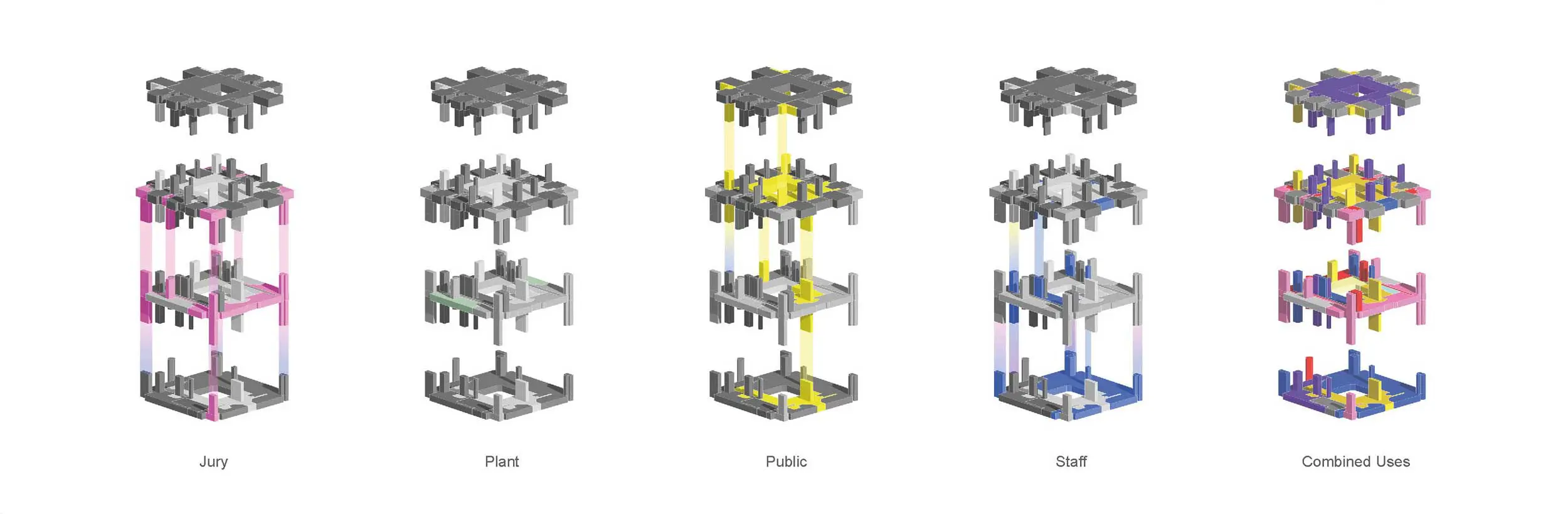
This has been addressed as part of the emerging themes from 2018. The Court Service Design Guides have gone through a number of changes over the years and the 2010 edition has, in effect, been withdrawn in 2017. The 2010 document replacing the earlier 2007 and 2004 editions. The document underpinned the size, space allocation and specification of court buildings in England and Wales over the last 25 years, however with the changing pace of technology could be regarded as too prescriptive. The earlier editions were not publicly available, however this changed from 2004 when they were available for download from the technical indices providers.
The MoJ, via the HM Courts &Tribunals Service, led the way in consultation into “what is the court of the future,” with a major consultation exercise carried out in the Spring 2018. One thing that will dominate new court design is the integration of: new technologies which will bring forward “virtual hearings”, digital service delivery flexible opening hours and the improvement of the service by way of maximising the use of the space in order that it is used for 100% of the time.
The 2010 CSDG is cited as one of the reasons there is a lack of flexibility as it only stipulates 4 basic courtroom types and eight different layouts. Guidance on the reform was published by HMCTS in June 2018 and centred around modern ways of working and new technologies. Core themes that will impact on the building design will be the Common Platform digital infrastructure that will be used between the Police, CPS and HMCTS defining the new standards which will base future building design. The key themes likely to influence the designs will be the shared services and integration within the mixed-use development and an overarching theme of “access to justice”.
A linear plan format can be utilised which can maximise the visual transparency of the building by locating the public concourse towards the street side and allow for a greater number of smaller flexible hearing spaces.
The modern court building will be appropriate for its setting, effective (safe and secure), accessible, flexible (and adaptable) and sustainable. It should be typified by dignified calm (visually and acoustically) interiors and visual transparency, where possible, to reflect the notion that “justice is seen to be done”.